Black Mass Read Online By John N. Gray
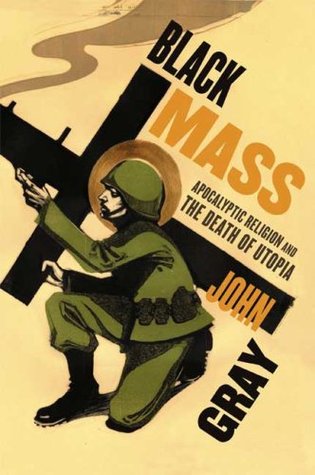
| Title | : | Black Mass |
| Author | : | John N. Gray |
| Format | : | Hardcover |
| Page | : | 256 pages |
| ISBN | : | 0374105987 |
For the decade that followed the end of the cold war, the world was lulled into a sense that a consumerist, globalized, peaceful future beckoned The beginning of the twenty first century has rudely disposed of such ideas most obviously through 9 11and its aftermath But just as damaging has been the rise in the West of a belief that a single model of political behavior w For the decade that followed the end of the cold war, the world was lulled into a sense that a consumerist, globalized, peaceful future beckoned The beginning of the twenty first century has rudely disposed of such ideas most obviously through 9 11and its aftermath But just as damaging has been the rise in the West of a belief that a single model of political behavior will become a worldwide norm and that, if necessary, it will be enforced at gunpoint In Black Mass, celebrated philosopher and critic John Gray explains how utopian ideals have taken on a dangerous significance in the hands of right wing conservatives and religious zealots He charts the history of utopianism, from the Reformation through the French Revolution and into the present And most urgently, he describes how utopian politics have moved from the extremes of the political spectrum into mainstream politics, dominating the administrations of both George W Bush and Tony Blair, and indeed coming to define the political center Far from having shaken off discredited ideology, Gray suggests, we are than ever in its clutches Black Mass is a truly frightening and challenging work by one of Britain s leading political thinkers John Gray is the author of many critically acclaimed books, including Straw Dogs and Al Qaeda and What It Means to Be Modern A regular contributor to The New York Review of Books, he is a professor of European thought at the London School of Economics In the decade that followed the end of the cold war, the world was lulled into a sense that a peaceful, consumerist, globalized future was ahead The beginning of the twenty first century has rudely disposed of such ideas most obviously through 9 11 and its aftermath Just as damaging has been the rise in the West of a belief that a single model of political behavior will become a worldwide norm and that, if necessary, it will be enforced at gunpoint In Black Mass, philosopher and critic John Gray explains how utopian ideals have taken on a dangerous significance in the hands of right wing conservatives and religious zealots He charts the history of utopianism, from the Reformation through the French Revolution and into the present He describes how utopian politics have moved from the extremes of the political spectrum into mainstream politics, dominating the administrations of both George W Bush and Tony Blair, and coming to define the political center Gray suggests that we have not shaken off discredited ideology, but we are than ever in its clutches Modern politics is a chapter in the history of religion, Gray, a British philosopher, insists in this outspoken attack on utopianism and the faith based violence it has inspired History, Gray writes, offers no new dawns or sharp breaks, and, from the French Revolution to the war on terror, he is as critical of the humanist belief in progress as of the belligerent optimism of neoconservatives Sketching the roots of utopianism, he emphasizes the similarities between seemingly disparate movements radical Islam, he suggests, might best be thought of as Islamo Jacobinism Taking the Iraq war as an object lesson, he argues for an acknowledgment that the local pieties of Atlantic democracy are not the only way to govern Gray s writing has a bracing clarity The New Yorker Modern politics is a chapter in the history of religion, Gray, a British philosopher, insists in this outspoken attack on utopianism and the faith based violence it has inspired History, Gray writes, offers no new dawns or sharp breaks, and, from the French Revolution to the war on terror, he is as critical of the humanist belief in progress as of the belligerent optimism of neoconservatives Sketching the roots of utopianism, he emphasizes the similarities between seemingly disparate movements radical Islam, he suggests, might best be thought of as Islamo Jacobinism Taking the Iraq war as an object lesson, he argues for an acknowledgment that the local pieties of Atlantic democracy are not the only way to govern Gray s writing has a bracing clarity The New Yorker Gray s Black Mass is a little Molotov cocktail of a book, blowing up the categories in which we usually discuss matters like the war in Iraq and the direction of history Any book that herds Robespierre, Lenin, radical Islamists and neoconservatives into one conceptual corral doesn t lack for audacity While Gray covers a lot of ground, tracing millenarian thinking from early Christianity to the present, he mainly sets his sights on the American neoconservative project to export free market capitalism and liberal democracy at the point of a gun if necessary The story line of Black Mass goes like this Christianity bequeathed to the West the idea of apocalypse, a violent event in history that transforms everything and remakes the world That idea wormed its way into our DNA, so to speak, and has been there ever since Gray is not the first to see the Iraq War as rooted in a naive right wing utopianism What s impressive is the way he embeds present political trends in a larger framework going back to the beginnings of Western culture T he book challenges and provokes For most readers, I suspect, it will tell them things they didn t know Fritz Lanham, Houston Chronicle A limpidly argued and finely written synthesis of Gray s thinking over the decade or so since False Dawn, his highly regarded and influential study of globalisation It is not a cheering work, to say the least, and Gray s conclusions, though never exaggerated or overstated, are bleak Yet the right expression of even the bleakest truths is always invigorating, and any half sensible reader will come away from the book soberer and even, perhaps, wiser John Banville, The Guardian Gray is right to scoff at the misplaced faith in progress propounded by Enlightenment philosophers Gray reminds us about ancient and truthful myths, which predicted that our reckless pursuit of knowledge and power would lead to disaster Peter Conrad, The Observer When the fashionable pundits of the age of globalization are as forgotten as those who, in the run up to World War I, predicted globalization had rendered war obsolete, John Gray s work will still matter It is at once a reproof and an antidote to the reigning wishful thinking that makes Voltaire s Dr Pangloss look like a realist Gray s work has always been about separating reality and delusion In Black Mass, Gray dissects the greatest of all political delusions utopianism and maps the way in which, against all expectations, it has migrated from left to right, from communism to neo conservatism This is that rarest of things, a necessary book David Rieff Seeing history as a progressive narrative, especially one with a utopian ending, is a practice that has doomed earlier civilizations and threatens our own, argues Gray Having dealt with the concept of human progress in such previous books as Al Qaeda and What It Means to Be Modern, the author sees no reason to revise his core belief Human
about Author
 John Nicholas Gray is a English political philosopher with interests in analytic philosophy and the history of ideas He retired in 2008 as School Professor of European Thought at the London School of Economics and Political Science Gray contributes regularly to The Guardian, The Times Literary Supplement and the New Statesman, where he is the lead book reviewer.
Straw Dogs: Thoughts on Humans and Other Animals
The Silence of Animals: On Progress and Other Modern Myths
False Dawn: The Delusions of Global Capitalism
Al Qaeda and What It Means to Be Modern
Title: Black MassPosted by:
Published :2016-02-05T18:29+01:00
For the decade that followed the end of the cold war, the world was lulled into a sense that a consumerist, globalized, peaceful future beckoned The b
256 pagesJohn N. Gray
No comments:
Post a Comment