Modernity and Self-Identity Free Download By Anthony Giddens
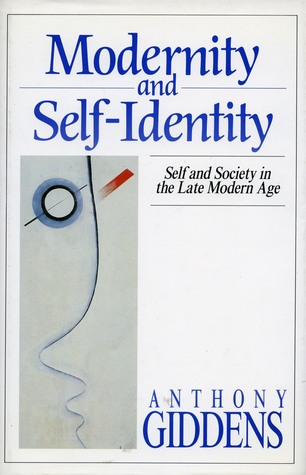
| Title | : | Modernity and Self-Identity |
| Author | : | Anthony Giddens |
| Format | : | Paperback |
| Page | : | 264 pages |
| ISBN | : | 0804719446 |
Modernity differs from all preceding forms of social order because of its dynamism, its deep undercutting of traditional habits and customs, and its global impact It also radicallly alters the general nature of daily life and the most personal aspects of human activity In fact, one of the most distinctive features of modernity is the increasing interconnection between gl Modernity differs from all preceding forms of social order because of its dynamism, its deep undercutting of traditional habits and customs, and its global impact It also radicallly alters the general nature of daily life and the most personal aspects of human activity In fact, one of the most distinctive features of modernity is the increasing interconnection between globalizing influences and personal dispositions The author analyzes the nature of this interconnection and provides a conceptual vocabulary for it, in the process providing a major rethinking of the nature of modernity and a reworking of basic premises of sociological analysis.Building on the ideas set out in the authors The Consequences of Modernity, this book focuses on the self and the emergence of new mechanisms of self identity that are shaped by yet also shape the institutions of modernity The author argues that the self is not a passive entity, determined by external influences Rather, in forging their self identities, no matter how local their contexts of action, individuals contribute to and directly promote social influences that are global in their consequences and implications.The author sketches the contours of the he calls high modernity the world of our day and considers its ramifications for the self and self identity In this context, he analyzes the meaning to the self of such concepts as trust, fate, risk, and security and goes on the examine the sequestration of experience, the process by which high modernity separates day to day social life from a variety of experiences and broad issues of morality The author demonstrates how personal meaninglessness the feeling that life has nothing worthwhile to offer becomes a fundamental psychic problem in circumstances of high modernity The book concludes with a discussion of life politics, a politics of selfactualization operating on both the individual and collective levels
about Author
 Anthony Giddens, Baron Giddens born 18 January 1938 is a British sociologist who is renowned for his theory of structuration and his holistic view of modern societies He is considered to be one of the most prominent modern contributors in the field of sociology, the author of at least 34 books, published in at least 29 languages, issuing on average than one book every year In 2007, Gidden Anthony Giddens, Baron Giddens born 18 January 1938 is a British sociologist who is renowned for his theory of structuration and his holistic view of modern societies He is considered to be one of the most prominent modern contributors in the field of sociology, the author of at least 34 books, published in at least 29 languages, issuing on average than one book every year In 2007, Giddens was listed as the fifth most referenced author of books in the humanities.Three notable stages can be identified in his academic life The first one involved outlining a new vision of what sociology is, presenting a theoretical and methodological understanding of that field, based on a critical reinterpretation of the classics His major publications of that era include Capitalism and Modern Social Theory 1971 and New Rules of Sociological Method 1976 In the second stage Giddens developed the theory of structuration, an analysis of agency and structure, in which primacy is granted to neither His works of that period, such as Central Problems in Social Theory 1979 and The Constitution of Society 1984 , brought him international fame on the sociological arena.The most recent stage concerns modernity, globalization and politics, especially the impact of modernity on social and personal life This stage is reflected by his critique of postmodernity, and discussions of a new utopian realist 3 third way in politics, visible in the Consequence of Modernity 1990 , Modernity and Self Identity 1991 , The Transformation of Intimacy 1992 , Beyond Left and Right 1994 and The Third Way The Renewal of Social Democracy 1998 Giddens ambition is both to recast social theory and to re examine our understanding of the development and trajectory of modernity.Currently Giddens serves as Emeritus Professor at the London School of Economics
Sociology
Capitalism and Modern Social Theory: An Analysis of the Writings of Marx, Durkheim and Max Weber
The Consequences of Modernity
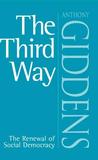
The Third Way: The Renewal of Social Democracy
Title: Modernity and Self-IdentityPosted by:
Published :2016-04-24T20:15+01:00
Modernity differs from all preceding forms of social order because of its dynamism, its deep undercutting of traditional habits and customs, and its g
264 pagesAnthony Giddens
No comments:
Post a Comment