Lady Macbeth of Mtsensk Read By Nikolai Leskov

| Title | : | Lady Macbeth of Mtsensk |
| Author | : | Nikolai Leskov |
| Format | : | Paperback |
| Page | : | 88 pages |
| ISBN | : | 1843910683 |
In this powerful and brutal short story, Leskov demonstrates the enduring truth of the Shakespearean archetype joltingly displaced to the heartland of Russia Chastened and stifled by her marriage of convenience to a man twice her age, the young Katerina Lvovna goes yawning about the house, missing the barefoot freedom of her childhood, until she meets the feckless steward In this powerful and brutal short story, Leskov demonstrates the enduring truth of the Shakespearean archetype joltingly displaced to the heartland of Russia Chastened and stifled by her marriage of convenience to a man twice her age, the young Katerina Lvovna goes yawning about the house, missing the barefoot freedom of her childhood, until she meets the feckless steward Sergei Filipych Sergei proceeds to seduce Katerina, as he has done half the women in the town, not realizing that her passion, once freed, will attach to him so fiercely that Katerina will do anything to keep hold of him Journalist and prose writer Nikolai Leskov is known for his powerful characterizations and the quintessentially Russian atmosphere of his stories
about Author
 also Nikolaj S LeskowNikolai LeskovNikolaj Sem novi Leskov Nikola Semenovich LeskovNikolai Ljeskow Nikolai Semyonovich Leskov Russian 16 February 1831 5 March 1895 was a Russian novelist, short story writer, playwright, and journalist who also wrote under the pseudonym M Stebnitsky Praised for his unique writing s also Nikolaj S LeskowNikolai LeskovNikolaj Sem novi Leskov Nikola Semenovich LeskovNikolai Ljeskow Nikolai Semyonovich Leskov Russian 16 February 1831 5 March 1895 was a Russian novelist, short story writer, playwright, and journalist who also wrote under the pseudonym M Stebnitsky Praised for his unique writing style and innovative experiments in form, and held in high esteem by Leo Tolstoy, Anton Chekhov and Maxim Gorky among others, Leskov is credited with creating a comprehensive picture of contemporary Russian society using mostly short literary forms His major works include Lady Macbeth of Mtsensk 1865 which was later made into an opera by Shostakovich , The Cathedral Clergy 1872 , The Enchanted Wanderer 1873 , and The Tale of Cross eyed Lefty from Tula and the Steel Flea 1881.Leskov was born at his parent s estate in Oryol Gubernia in 1831 He received his formal education at the Oryol Lyceum In 1847 Leskov joined the Oryol criminal court office, later transferring to Kiev where he worked as a clerk, attended university lectures, mixed with local people, and took part in various student circles In 1857 Leskov quit his job as a clerk and went to work for the private trading company Scott Wilkins owned by Alexander Scott, his aunt s English husband He spent several years traveling throughout Russia on company business It was in these early years that Leskov learned local dialects and became keenly interested in the customs and ways of the different ethnic and regional groups of Russian peoples His experiences during these travels provided him with material and inspiration for his future as a writer of fiction.Leskov s literary career began in the early 1860s with the publication of his short story The Extinguished Flame 1862 , and his novellas Musk Ox May 1863 and The Life of a Peasant Woman September, 1863 His first novel No Way Out was published under the pseudonym M Stebnitsky in 1864 From the mid 1860s to the mid 1880s Leskov published a wide range of works, including journalism, sketches, short stories, and novels Leskov s major works, many of which continue to be published in modern versions, were written during this time A number of his later works were banned because of their satirical treatment of the Russian Orthodox Church and its functionaries In his last years Leskov suffered from angina pectoris and asthma He died on 5 March 1895 He was interred in the Volkovo Cemetery in Saint Petersburg, in the section reserved for literary figures

The Enchanted Wanderer: Selected Tales
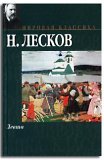
Левша
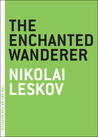
The Enchanted Wanderer
The Sealed Angel and Other Stories by Nikolay Leskov
Title: Lady Macbeth of MtsenskPosted by:
Published :2016-02-13T21:16+01:00
In this powerful and brutal short story, Leskov demonstrates the enduring truth of the Shakespearean archetype joltingly displaced to the heartland of
88 pagesNikolai Leskov
No comments:
Post a Comment